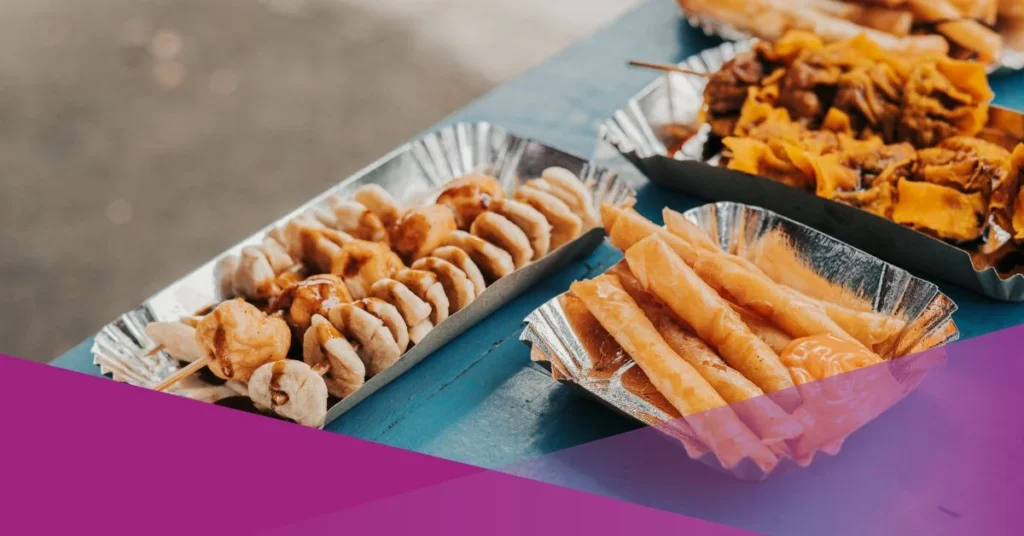
Thailand is well known for its food, but some of the best ways to experience Thai cuisine are still found outside formal dining rooms. Across Bangkok, food carts, market stalls, roadside kitchens and small restaurants serve dishes that are part of everyday life for locals.
From pad thai and rice noodles to grilled pork, green papaya salad and Thai omelette, Bangkok street food offers a wide range of flavours and textures. Many dishes are prepared to order, allowing diners to adjust the level of spice, while others have been sold by the same families or vendors for years.
The scale of the scene can make choosing what to eat difficult, particularly for first-time visitors. Chawadee Nualkhair, author of Bangkok’s Top 50 Street Food Stalls, said her research involved eating at least 150 stalls before narrowing the list down. She explained that the aim was to help people understand “what to order and how to do it”.
Here are some of the Thai street food dishes worth looking for during a trip to Bangkok and elsewhere in Thailand.
Popular Thai Street Food to Try in Bangkok
Pad Thai
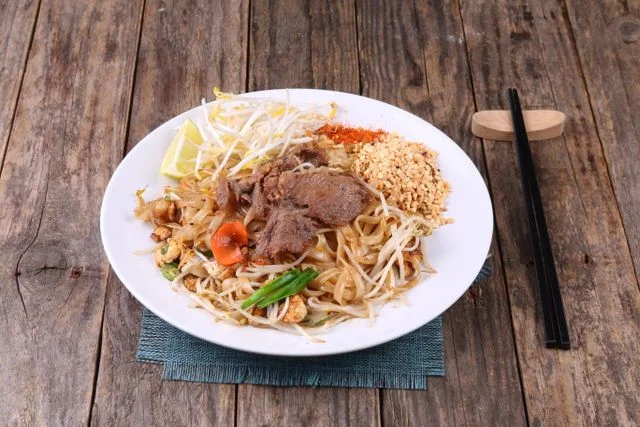
Pad thai is one of the best-known dishes in Thai food and remains a common choice for visitors trying street food for the first time.
The dish is generally made with flat rice noodles stir-fried with ingredients such as tofu, egg, beansprouts and prawns or another protein. Tamarind, lime, sugar and fish sauce provide the sweet, sour and savoury balance associated with the dish. The exact combination varies between vendors.
The dish can also be served in an omelette-style preparation. Rather than mixing the egg through the noodles, the cooked pad thai is wrapped inside a thin layer of egg.
Pad thai is available from street food stalls as well as Thai restaurants, so visitors can easily compare different versions during their trip.
Pad Krapao
Pad krapao is another everyday dish that can be found throughout Bangkok. It combines meat with Thai holy basil, garlic and chilli, usually served over steamed rice with a fried egg.
Chicken, pork, beef, seafood and tofu can all be used. Fish sauce and oyster sauce add savoury depth, while the fried egg provides a softer contrast to the spicy stir-fry.
The dish is particularly practical for travellers because it is widely available at made-to-order stalls. The amount of chilli can also be adjusted, making it easier for visitors who are not accustomed to Thai levels of spice.
Som Tam
Som tam, or green papaya salad, is made from shredded unripe papaya pounded with ingredients including chilli, lime juice, fish sauce, palm sugar, tomatoes and peanuts. Some versions also contain dried shrimp or fermented fish.
The combination produces several flavours at once, including sour, salty, sweet and spicy.
Spice levels can vary significantly. Travellers who are not used to chilli should tell the vendor before preparation begins. In Bangkok, som tam is often served alongside grilled chicken and sticky rice, creating a complete meal rather than a standalone salad.
Tom Yum
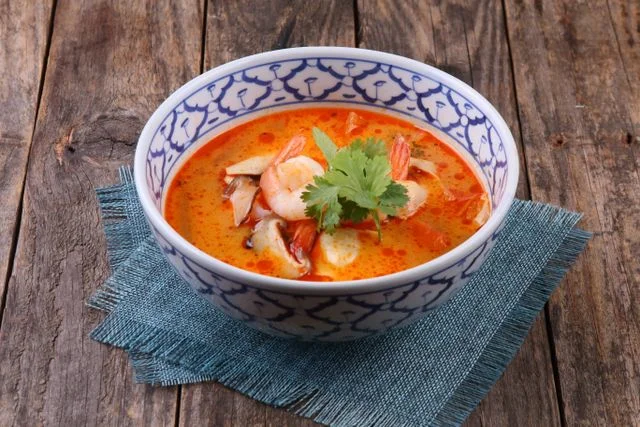
Tom yum is a hot and sour soup built around ingredients such as lemongrass, galangal, makrut lime leaves, chilli, lime juice and fish sauce. Tom yum goong, made with prawns, is one of the best-known versions, although chicken, seafood and mushroom varieties are also common.
The soup can be prepared with a clear broth or a creamier version. For visitors who want to combine the flavours of tom yum with a noodle dish, bamee tom yum uses egg noodles with minced pork, fish balls and other toppings.
Moo Ping
Moo ping consists of small pieces of marinated pork grilled over charcoal. The pork is commonly seasoned with ingredients such as garlic, coriander root, fish sauce, oyster sauce and palm sugar.
The skewers are frequently paired with sticky rice and eaten as a quick breakfast or snack. In Bangkok, they can be found around transport hubs, markets and roadside food stalls.
The simplicity of the dish makes it an easy introduction to Bangkok street food. It can be eaten without cutlery, making it particularly convenient while exploring the city.
Noodle Dishes That Belong on a Thailand Food List
Pad See Ew
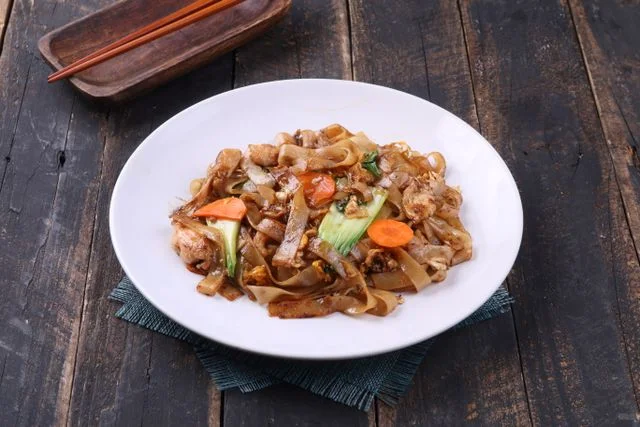
Pad see ew is a stir-fried noodle dish made with wider noodles, dark and light soy sauce, vegetables and egg. Chinese broccoli or similar greens are commonly added.
The noodles are cooked directly in a hot wok, giving the dish a savoury flavour and a slightly smoky quality. It is also generally less spicy than some other Thai dishes, making it a useful option for visitors who prefer milder food.
The dish can be found at both street food stalls and restaurants throughout Bangkok.
Boat Noodles
Boat noodles, known as guay tiew reua, have a connection with Thailand’s waterways and were traditionally sold by vendors operating from small boats.
The dish consists of noodles served in a strongly flavoured broth with meat or meatballs and other garnishes. Some traditional versions use a small amount of beef blood in the stock, although this is optional.
The portions are often small, which allows diners to order several bowls and try different combinations. Bangkok’s Victory Monument area is particularly associated with boat noodles.
Bamee Giew Moo Dang
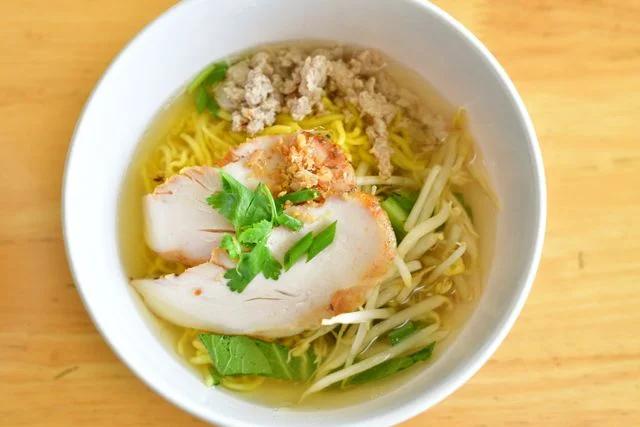
Bamee giew moo dang combines egg noodles with pork wontons, barbecued pork and Chinese greens. It can be served with a clear or pork-based broth.
The dish is among the noodle-based options highlighted by the MICHELIN Guide and is often described as a comforting choice, particularly when served as a hot bowl of soup.
For travellers looking for a straightforward noodle meal, it offers a combination of protein, noodles and broth without the intensity of some heavily spiced dishes.
Kanom Jeen with Green Curry
Kanom jeen consists of fermented rice noodles served with different curries and sauces. One popular combination pairs the noodles with Thai green curry.
The fermentation process gives the noodles their characteristic texture, while the curry brings together herbs and spices including coriander, cumin, galangal and lemongrass.
Although it may be less familiar to international visitors than pad thai, it provides a different perspective on Thai cuisine and the country’s use of rice noodles.
Rice Dishes and Thai Comfort Food
Khao Man Gai
Khao man gai is Thailand’s take on Hainanese chicken rice. It consists of chicken served over rice cooked with chicken broth and fat, usually accompanied by a clear soup and a dipping sauce.
The sauce is important to the dish, with recipes varying between vendors. Common ingredients include soy sauce, vinegar, ginger, chilli and garlic.
It is widely available around Bangkok and can be a good choice for travellers looking for a relatively mild meal.
Khao Kha Moo
Khao kha moo features pork leg that has been slowly braised in a seasoned sauce and served with rice. It is typically accompanied by a boiled egg, vegetables and a sweet-and-sour dipping sauce.
The long cooking process gives the pork a soft texture. The combination of meat, rice and sauce also makes it a filling option for lunch or dinner.
Thai Omelette
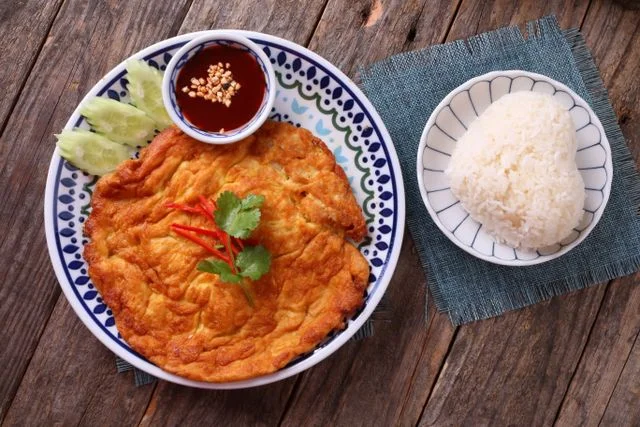
Kai jeow is a simple Thai omelette that is commonly served over rice. A version made with minced pork and garlic, kai jeow moo gratiam, combines eggs with pork and fried garlic.
The omelette is cooked in plenty of hot oil, producing a crisp exterior and a soft centre. It is one of the dishes that can be found at ordinary made-to-order stalls rather than requiring a specialist restaurant.
Jay Fai is also known for its crab omelette. The Bangkok street food institution is highlighted by both Travelfish and other food guides for its seafood dishes and omelette. Nualkhair described Jay Fai as “my favourite food stand in the city”.
Grilled Food and Dishes Beyond Pad Thai
Khao Niew Gai Yang with Som Tam
Grilled chicken, sticky rice and som tam form a common combination in Thai food. The chicken is grilled over charcoal, while the green papaya salad provides a fresh and spicy contrast.
The MICHELIN Guide recommends eating the three together, with sticky rice used to pick up the grilled chicken and som tam.
For visitors who want to sample several elements of Thai cuisine in one meal, this combination provides meat, rice and a spicy salad in a single order.
Khao Mok Gai
Khao mok gai is a Thai Muslim dish similar in appearance to chicken biryani. Chicken is cooked with fragrant yellow rice and spices such as turmeric, cumin and coriander before being topped with fried shallots.
Unlike many dishes associated with Thai cuisine, it is not particularly spicy. Its flavour comes mainly from the aromatic spices rather than chilli.
Nualkhair also singled out khao mok gai on Convent Road as one of her preferred weekday lunches, noting that it was only available at a particular time of day.
Sweet Street Foods to Try in Thailand
Thai street food is not limited to savoury meals. Markets and Bangkok street stalls also sell a range of desserts and snacks.
Mango Sticky Rice
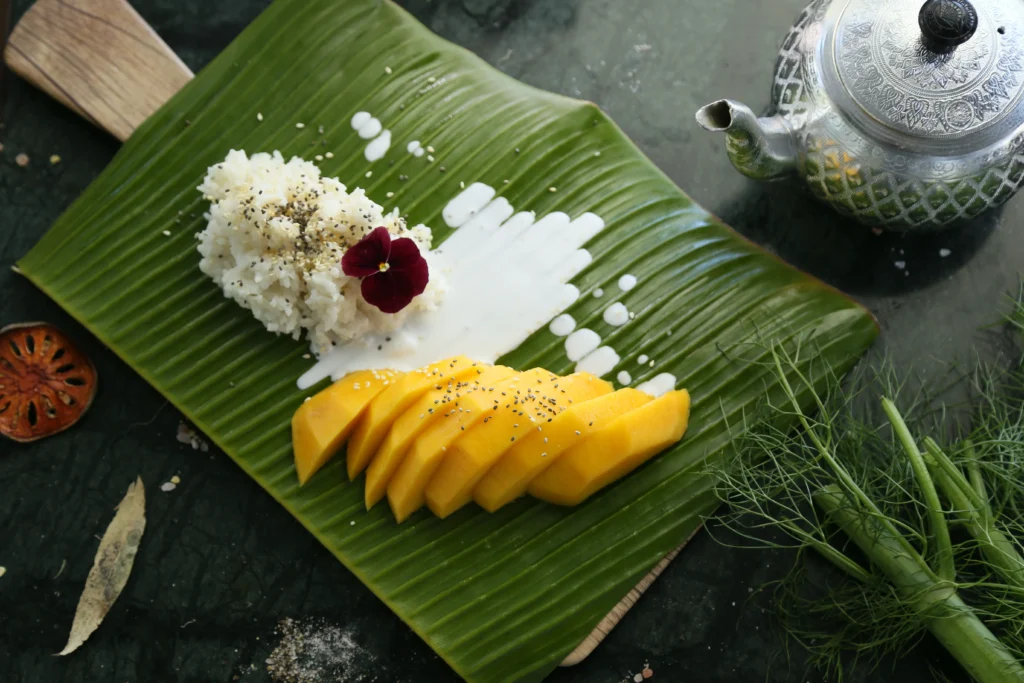
Mango sticky rice combines glutinous rice, fresh mango and sweet coconut milk. It is one of Thailand’s most recognisable desserts and is widely available from markets and food stalls.
The dessert is relatively simple, but the combination of creamy coconut, sticky rice and ripe mango makes it a popular way to finish a meal.
Coconut Ice Cream
Coconut ice cream is another common street-side dessert, particularly useful during Bangkok’s hot weather. It is often served with pieces of coconut flesh and toppings such as red beans.
It can be found in markets and from mobile vendors across Thailand.
Banana Roti
Banana roti is made by cooking thin dough on a hot surface before folding it around sliced banana. Condensed milk is commonly added, while some stalls offer additional fillings such as egg or cheese.
It is particularly associated with evening and late-night street food and can be found in tourist areas as well as local markets.
Where to Find Bangkok Street Food
Bangkok’s food scene extends across markets, neighbourhood streets, night markets, shophouses and individual stalls. Yaowarat, Bangkok’s Chinatown, is known for dishes including guay jub, oyster omelettes, seafood and desserts, while Silom and Convent Road offer grilled meat, som tam and other Thai dishes.
Banglamphu is another area worth exploring. Nualkhair recommended the stretch connecting Tanao Road and Mahachai Road, describing it as a place with “some of the best food in Bangkok”.
Travellers do not necessarily need to look for a famous stall. Many popular Thai dishes are prepared at ordinary roadside kitchens throughout the city. In fact, the experience of eating at a modest street food stall can be as much about observing the preparation as the food itself.
How to Order at a Thai Street Food Stall
For first-time visitors, ordering from a Bangkok street stall can seem difficult, particularly when menus are written in Thai. However, the process does not always require fluent Thai.
Nualkhair advises travellers to choose a stall that is busy but not overwhelmed by orders. If there is no written menu, pointing at the food can work. For stalls using written order slips, she suggests copying the items shown on the slip used by another customer.
Another useful approach is to pay attention to spice levels. A few basic Thai phrases can make ordering easier, particularly when asking for less chilli. Travellers can also indicate the desired number of chillies when ordering dishes such as som tam.
Cleanliness is another consideration. Nualkhair recommended checking the condiment tray, particularly the containers holding fish sauce, pickled chillies and sugar. “If the condiment tray is clean, the food will be clean,” she told Travelfish.
That does not mean every stall will suit every traveller. Food that has been sitting out for long periods should be approached with more caution, while freshly cooked dishes from busy stalls are generally a more practical choice.
Thai Street Food Offers More Than the Familiar Dishes
Pad thai, tom yum and som tam may be among the first dishes associated with Thailand, but they represent only part of the country’s food culture.
A visit to Bangkok can introduce travellers to dishes such as khao mok gai, boat noodles, bamee giew moo dang, kai jeow and moo ping. Regional influences also appear throughout the city’s street food, from Thai Muslim cooking to Isan-style grilled meat and salads.
For visitors with limited time, starting with a few familiar dishes before moving towards less familiar options can make exploring Thai cuisine easier. The key is to look beyond the most recognisable names and pay attention to the smaller stalls, markets and local restaurants along the way.
As Nualkhair’s research demonstrates, Bangkok has far more street food than any single list can cover. After eating at more than 150 stalls, she still described the city’s food as “a constant work in progress”.
That variety is part of what makes Bangkok street food worth exploring. Rather than relying on one signature dish, travellers can build their own food itinerary around noodles, rice dishes, grilled meats, salads, omelettes and desserts, discovering different sides of Thai food with every stop.