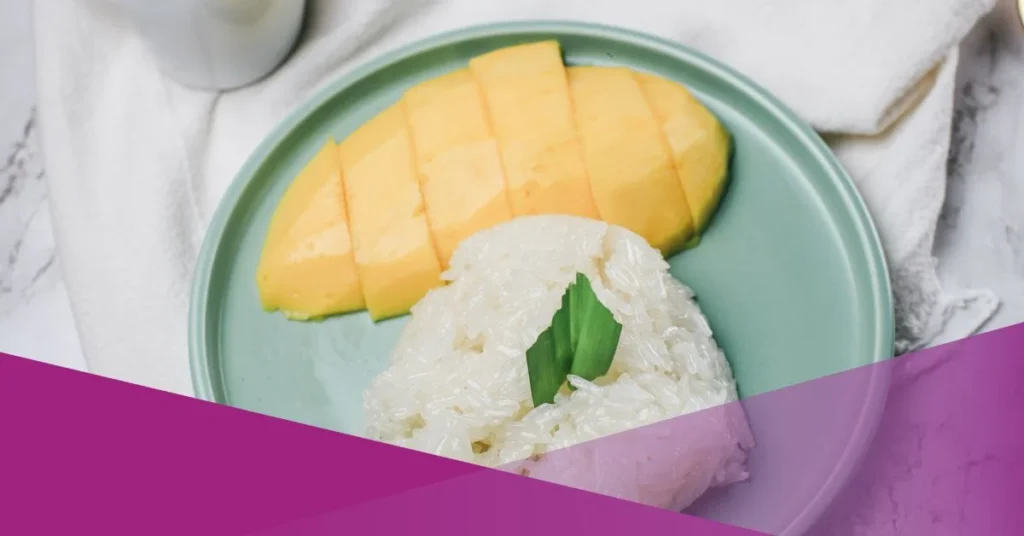
Few culinary creations capture the balance of tropical simplicity and indulgence quite like khao niao mamuang, widely known as mango sticky rice. Served across Southeast Asia as both elevated restaurant fare and bustling street food, this beloved treat pairs warm, fragrant glutinous rice infused with salted coconut cream alongside slices of chilled, perfectly ripe mango.
In recent years, the dish has experienced a dramatic resurgence in global pop culture, notably after Thai artist MILLI enjoyed a bowl live on stage during her 2022 Coachella performance. However, beneath its contemporary viral status lies a storied history shaped by regional trade, seasonal harvests, and centuries of culinary refinement.
The Historical Evolution of a Classic Thai Dessert
While mango sticky rice is celebrated internationally as Thailand’s national dessert, its essential components reflect the shared agrarian history of Southeast and South Asia.
Historical culinary texts suggest that the practice of pairing sweetened glutinous rice with native fruits originated during the late Ayutthaya period (1351–1767) and flourished through the reigns of King Rama II and King Rama V. Documents from the late nineteenth century record that steamed glutinous rice macerated in coconut milk, known locally as khao niao moon, was regularly consumed alongside seasonal orchard fruits.
The individual elements themselves highlight the cross-cultural exchange of the region:
- The Mango: Indigenous to India, Myanmar, and East Asia, mangoes have been cultivated for over 5,000 years. Their introduction to the Indochinese peninsula established them as a cornerstone of seasonal diets.
- Glutinous Rice: Unlike standard long-grain rice, glutinous or “sticky” rice has historically served as a staple crop in Northeastern Thailand (Isan) and neighbouring Laos. The Laotian tradition of pairing steamed glutinous rice with fruit gradually merged with Central Thai culinary techniques, where coconut palm plantations were abundant.
This synthesis of regional agriculture, combining Northern grains, Central coconut milk, and native tropical fruit, culminated in the classic dish enjoyed today across Thailand, Laos, Cambodia, and Malaysia. It is usually eaten during the peak mango season of April and May.
Mango Sticky Rice: Selecting the Perfect Ingredient Profile
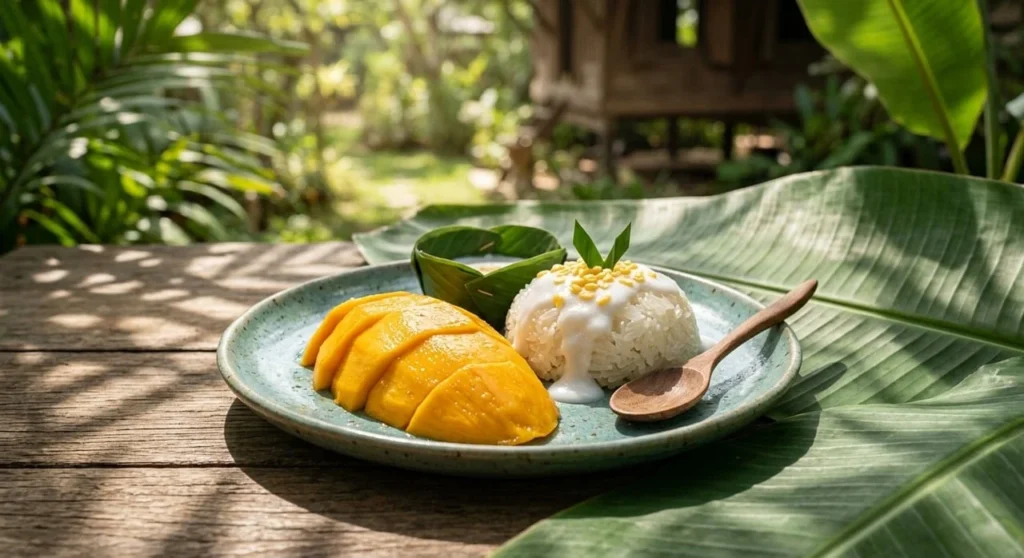
The success of mango sticky rice relies entirely upon the quality and balance of each individual ingredient. Because the dish contains very few components, selecting the correct varieties and executing proper preparation techniques is vital.
1. The Mango
The mango part of the dessert is simply fresh mango! The fruit provides the vibrant acidity and natural sweetness needed to cut through the richness of the rice. In Thailand, two main cultivars are traditionally favoured:
- Nam Dok Mai: Known for its elongated shape, smooth texture, aromatic fragrance, and intense sweetness.
- Ok-Rong: A heritage cultivar that is slightly more fibrous but renowned for its deep, floral aroma and juicy flesh.
Outside Thailand, Manila (Ataulfo or Champagne) mangoes serve as the finest substitute, offering a buttery, non-fibrous texture and balanced nectar notes.
2. The Glutinous Rice
Standard jasmine or short-grain rice cannot be substituted. Authentic preparation requires long-grain Thai glutinous rice (khao niao). The grain is soaked for several hours and gently steamed in a bamboo basket rather than boiled, yielding a plump grain that absorbs liquid without becoming mushy. Wash the glutinous rice about 4-5 times until the water runs mostly clear. To prepare the dish, the rice is soaked in water and then cooked by steaming or the use of a rice cooker. Do not use any other method to cook the rice.
The classic version of mango and sticky rice uses white sticky rice, but nowadays you can find it with other colours of rice based on natural dyes. There are variations to the classic mango sticky rice, such as substituting white sticky rice with black sticky rice, imparting a purple color.
3. The Coconut Maceration and Sauce
Coconut milk plays a dual role in this classic dessert:
- The Coconut Syrup: Fresh coconut milk is gently heated with granulated white sugar, sea salt, and pandan leaves. The hot, freshly steamed rice is steeped in this hot syrup (maceration), allowing the grains to absorb the sweet coconut aroma whilst maintaining their distinct shape.
- The Finishing Drizzle: A secondary salted coconut sauce, thickened slightly with rice flour or cornstarch, is poured over the top just before serving to balance the sweetness.
4. The Crispy Garnishing
To complete the texture profile, split yellow mung beans (thua thong) are soaked, toasted until golden, and sprinkled over the top, adding a light crunchy contrast to the soft rice and smooth fruit.
Frequently Asked Questions (PAA)
What gives mango sticky rice its distinct texture?
The distinct texture comes from Thai long-grain glutinous rice, which contains high levels of amylopectin starch. When steamed rather than boiled, the grains expand and cling together while retaining an al dente bite. Macerating the warm rice in rich coconut syrup gives it a shiny, soft finish without turning it mushy.
When is the best time of year to eat mango sticky rice?
The prime season to enjoy mango sticky rice is during Thailand’s hot summer months, running from March through May. This period marks the peak harvest season for sweet mango varieties like Nam Dok Mai and Ok-Rong, ensuring the fruit reaches optimum ripeness, aroma, and sweetness.
Can mango sticky rice be made with standard white rice?
No, standard white rice varieties such as jasmine, basmati, or short-grain sushi rice cannot achieve the necessary sticky consistency. Authentic mango sticky rice requires long-grain Thai glutinous (sweet) rice, which absorbs the coconut milk syrup while keeping its structural integrity.